















































The Neuroscience of Awe in Nature: Summer Edition
Summer is a season of abundance, growth, and vitality, making it the perfect time to experience awe - that profound feeling of wonder, humility, and connection when confronted with something larger than ourselves. At Esottera, we recognize awe as a gateway to Soul Sustainability™, because it enhances emotional regulation, prosocial behavior, and environmental responsibility.
Science confirms that moments of awe in nature aren’t just emotional - they reshape the brain, influence decision-making, and cultivate regenerative habits.
What is Awe?
Awe is defined as an emotional response to vastness that challenges current mental frameworks (Keltner & Haidt, 2003). In nature, this can be triggered by:
-
Expansive landscapes: mountains, oceans, or forests
-
Phenomena: sunrises, starry nights, or storms
-
Small but intricate patterns: pollinators, flowers, or water reflections
Summer offers heightened opportunities: longer days, peak biodiversity, and dynamic natural displays make awe experiences more accessible.
Neuroscience of Awe
Experiencing awe affects key brain regions:
-
Prefrontal Cortex: Awe enhances focus, planning, and social cognition (Shiota et al., 2017).
-
Insula Activation: Strengthens empathy and interoceptive awareness (Immordino-Yang et al., 2012).
-
Default Mode Network (DMN) Modulation: Awe reduces self-centered rumination and fosters a sense of connection to larger systems (van Elk et al., 2019).
These neural changes increase well-being, prosocial behavior, and ecological consciousness, essential for Soul Sustainability™.
Psychological and Emotional Benefits
Research demonstrates that awe:
-
Enhances generosity and prosocial behavior: Awe shifts focus from the self to the collective (Piff et al., 2015).
-
Reduces stress and inflammation: Experiencing vastness promotes calm and lowers physiological stress markers.
-
Boosts creativity and perspective-taking: Awe experiences expand cognitive schemas, encouraging novel solutions.
-
Deepens connection with nature: Feeling awe naturally fosters environmental stewardship.
Even brief encounters with awe - like a sunflower field or a lake at sunset - can have measurable effects on mind, body, and soul.
Practical Ways to Experience Summer Awe
1. Seek Natural Vistas
-
Hike hills, sit by lakes, or watch sunset reflections.
-
Pause, breathe, and let the immensity register fully in your awareness.
2. Observe Details in Abundance
-
Study intricate patterns: butterfly wings, flower petals, ripples in water.
-
Notice the interdependence of species and ecosystems.
3. Morning and Evening Rituals
-
Watch sunrise or sunset daily; track changes across days.
-
Use mindfulness to fully engage sight, sound, and scent.
4. Immersive Activities
-
Canoe on calm rivers, walk through dense forests, or camp under starry skies.
-
Minimize digital distractions to deepen presence.
5. Journaling Awe
-
Record moments that evoke wonder: what, how, and why.
-
Reflection enhances retention, emotional impact, and prosocial action.
Summer Awe and Soul Sustainability™
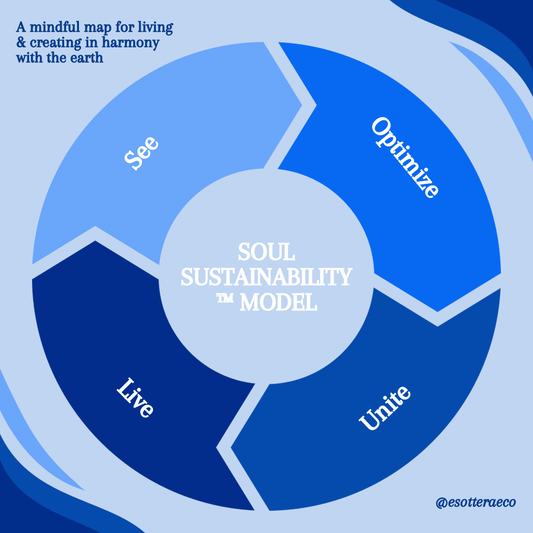
Awe aligns with Esottera’s SOUL™ framework:
-
SEE™: Recognize natural wonders, cycles, and patterns that challenge perception.
-
OPTIMIZE™: Adjust behavior to preserve ecological integrity, inspired by awe.
-
UNITE™: Deepen connection with self, community, and ecosystem.
-
LIVE™: Let awe guide choices toward regenerative living.
Awe is a bridge between personal experience and ecological action, making sustainability an embodied emotional practice rather than a conceptual one.
Science-Backed Impacts
-
Cognitive expansion: Awe experiences increase openness and cognitive flexibility (Shiota et al., 2007).
-
Social connectivity: Enhances generosity, prosocial behavior, and ethical choices (Piff et al., 2015).
-
Stress reduction: Awe reduces cortisol, heart rate, and inflammatory markers (Stellar et al., 2015).
-
Environmental engagement: Awe triggers motivation for pro-environmental actions, especially when experienced outdoors (Nisbet et al., 2019).
Seasonal timing amplifies these benefits: summer’s abundant biodiversity, sunlight, and warmth heighten sensory perception and accessibility.
Tips for Urban Awe-Seeking
Even in cities, awe is accessible:
-
Rooftop views of skyline or sunsets
-
Botanical gardens or arboretums
-
Public art installations in green spaces
-
Community parks with mature trees and water features
Pair with mindful breathing and digital detox for maximal neurological and emotional benefit.
Conclusion
Summer is the perfect time to experience awe and let it shape both mind and action. From morning sunrises to evening starry skies, awe expands cognition, reduces stress, fosters prosocial behavior, and strengthens ecological consciousness.
By intentionally seeking moments of awe, you embody Soul Sustainability™, allowing your inner emotional ecology to align with seasonal abundance and environmental regeneration.
Step outside, look closely, breathe deeply, and let summer’s wonders inspire regenerative action for yourself and the planet.
References (APA)
Immordino - Yang, M. H., Christodoulou, J. A., & Singh, V. (2012). Rest is not idleness: Neural correlates of the integration of social-emotional experience and cognitive control. Frontiers in Human Neuroscience, 6, 1-11.
Keltner, D., & Haidt, J. (2003). Approaching awe, a moral, spiritual, and aesthetic emotion. Cognition & Emotion, 17(2), 297-314.
Nisbet, E. K., Zelenski, J. M., & Murphy, S. A. (2019). Happiness, nature, and sustainability. Nature and Human Behavior, 3, 1035-1044.
Piff, P. K., Dietze, P., Feinberg, M., Stancato, D. M., & Keltner, D. (2015). Awe, the small self, and prosocial behavior. Journal of Personality and Social Psychology, 108(6), 883-899.
Shiota, M. N., Keltner, D., & Mossman, A. (2007). The nature of awe: Elicitors, appraisals, and effects on self-concept. Cognition & Emotion, 21(5), 944-963.
Shiota, M. N., Chen, S., Keltner, D., & John, O. P. (2017). Positive emotion dispositions and big five personality traits: A domain-level analysis. Journal of Research in Personality, 71, 66-83.
Stellar, J. E., John-Henderson, N., Anderson, C. L., Gordon, A. M., & Keltner, D. (2015). Positive affect and markers of inflammation: Discrete positive emotions predict lower levels of inflammatory cytokines. Emotion, 15(2), 129-133.
van Elk, M., Snoek, L., & van Schie, H. T. (2019). Awe is associated with a decreased focus on the self and increased attention to external information. Cognitive, Affective, & Behavioral Neuroscience, 19(3), 708-720.