









































Nature Immersion Rewires the Brain for Sustainability - Summer Edition
Summer invites us outdoors. The longer days, warmer temperatures, and lush landscapes provide the perfect environment to connect with nature - not just for leisure, but for personal and planetary regeneration. At Esottera, we emphasize that Soul Sustainability™ begins with observing, feeling, and immersing in the natural world.
Research shows that direct contact with nature transforms the brain, enhances emotional ecology, and fosters pro-environmental behavior. Summer offers a unique opportunity to harness these benefits when flora, fauna, and sunlight are at their peak.
Why Summer is Perfect for Nature Immersion
Summer offers longer daylight, encouraging extended outdoor engagement. Key advantages:
-
Sunlight exposure: Increases vitamin D, which supports mood and immune function (Holick, 2007).
-
Peak biodiversity: Birds, pollinators, and plant activity are highest in mid-year months, allowing richer sensory experience.
-
Active body connection: Warm temperatures encourage movement, enhancing blood flow and neurochemical release.
Immersion in nature is not just aesthetic - it reprograms the brain to value natural systems, fostering sustainability mindsets.
Neuroscience Behind Nature Immersion
Scientific studies confirm that spending time in natural environments triggers profound neurological effects:
-
Prefrontal Cortex Activation: Supports attention, decision-making, and long-term planning (Bratman et al., 2015).
-
Amygdala Reduction: Lowers stress, anxiety, and emotional reactivity (McEwan, 2012).
-
Default Mode Network (DMN) Regulation: Encourages reflection, creativity, and prosocial thinking (Raichle, 2015).
In other words, being in green spaces strengthens self-regulation, empathy, and ecological awareness - foundations of Soul Sustainability™.
Psychological and Emotional Benefits
Nature immersion in summer improves:
-
Mood and Well-Being: Exposure to sunlight and green spaces increases serotonin and dopamine.
-
Stress Reduction: Natural sounds, like birds or water, lower cortisol levels (Ulrich et al., 1991).
-
Cognitive Clarity: Attention restoration theory explains how natural environments replenish depleted mental resources (Kaplan & Kaplan, 1989).
-
Ecological Identity: Experiencing interconnectedness with living systems strengthens environmental motivation.
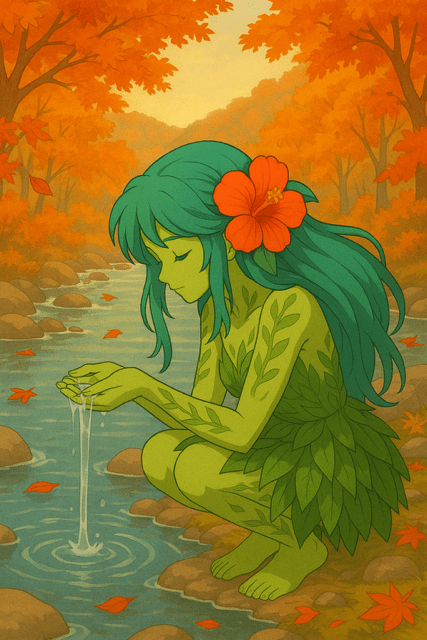
Even brief daily interactions - walking barefoot on grass, watching pollinators, or sitting by a creek - can have measurable effects.
Practical Summer Nature Immersion Practices
Here are seasonal, science-backed ways to immerse yourself in nature during June:
-
Morning Sun Walks: 15-20 minutes exposure enhances circadian rhythm and vitamin D levels.
-
Sensory Engagement: Focus on smell, sound, texture, and sight. Identify 5-10 natural elements daily.
-
Water Connection: Swimming, wading, or riverside reflection reduces stress and fosters awe.
-
Gardening or Plant Care: Active engagement with growth cycles connects you to regenerative systems.
-
Forest or Park Sit Spots: Even stationary observation regulates the nervous system and strengthens mindfulness.
Consistency matters: daily or repeated summer immersion provides cumulative neurological and emotional benefits.
Nature Immersion as Ecological Training
Experiencing natural systems directly fosters pro-environmental behavior:
-
People exposed regularly to green spaces are more likely to reduce waste, support conservation, and choose regenerative consumption (Nisbet & Zelenski, 2011).
-
Engaging all senses creates empathy for non-human life, shifting perspective from human-centric to ecosystem-centric thinking.
-
Experiential connection motivates action far more than abstract environmental facts alone.
Integrating Nature Immersion with Soul Sustainability™
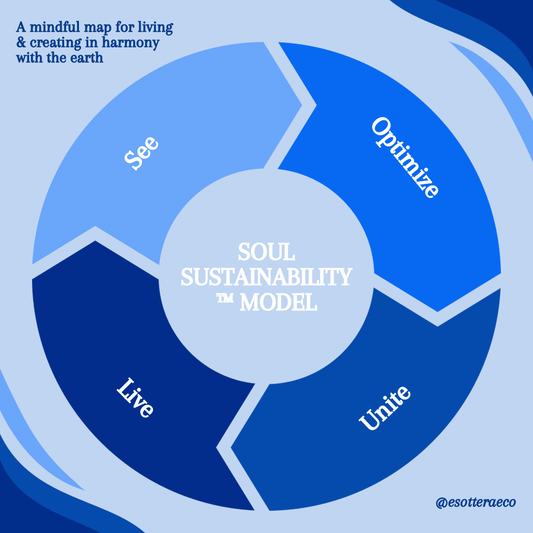
Nature immersion aligns with Esottera’s SOUL™ framework:
-
SEE™: Observing natural cycles, biodiversity, and resource flow.
-
OPTIMIZE™: Adjusting routines, habits, and energy in harmony with daylight and seasonal rhythms.
-
UNITE™: Connecting inner well-being with the external ecosystem.
-
LIVE™: Expressing values through regenerative choices and mindful action.
Immersive practices link emotional ecology, cognition, and action, making ecological responsibility embodied rather than theoretical.
Science-Backed Outcomes
-
Reduced Stress Hormones: Cortisol levels decrease 12-15% after 20 minutes in nature (Park et al., 2010).
-
Enhanced Creativity: Exposure to green spaces increases divergent thinking by 50% compared to urban walks (Atchley et al., 2012).
-
Improved Mental Health: Summer nature therapy can reduce anxiety and depression symptoms in adults (Berman et al., 2012).
The seasonal timing of June amplifies these effects due to longer sunlight hours and heightened ecological activity.
Tips for Urban Dwellers
Even in cities, summer provides immersion opportunities:
-
Rooftop gardens, urban parks, or local waterways
-
Balcony or window gardens with sensory variety (flowers, herbs)
-
Walking or cycling through green corridors instead of driving
-
Community gardening programs
Urban immersion can stimulate similar neurological and emotional responses, creating a feedback loop of well-being and environmental consciousness.
Conclusion
Summer is an ideal time to harness the transformative power of nature. By intentionally engaging with natural systems, you strengthen brain function, regulate emotions, and foster pro-environmental behavior.
Soul Sustainability™ is a practice, not just philosophy. Daily or repeated immersion during peak ecological months like June embeds ecological empathy and regenerative habits in your life.
Step outside. Observe. Feel. Engage. Let the summer sun and green abundance rewire your brain for a life that is restorative, sustainable, and soulful.
References (APA)
Atchley, R. A., Strayer, D. L., & Atchley, P. (2012). Creativity in the wild: Improving creative reasoning through immersion in natural settings. PLOS ONE, 7(12), e51474.
Berman, M. G., Jonides, J., & Kaplan, S. (2012). The cognitive benefits of interacting with nature. Psychological Science, 19(12), 1207-1212.
Bratman, G. N., Daily, G. C., Levy, B. J., & Gross, J. J. (2015). The benefits of nature experience: Improved affect and cognition. Landscape and Urban Planning, 138, 41-50.
Holick, M. F. (2007). Vitamin D deficiency. New England Journal of Medicine, 357(3), 266-281.
Kaplan, R., & Kaplan, S. (1989). The experience of nature: A psychological perspective. Cambridge University Press.
McEwen, B. S. (2012). Brain on stress: How the social environment gets under the skin. Proceedings of the National Academy of Sciences, 109(2), 17180-17185.
Nisbet, E. K., & Zelenski, J. M. (2011). Underestimating nearby nature: Mindfulness predicts environmental engagement. Journal of Environmental Psychology, 31(3), 296-303.
Park, B. J., Tsunetsugu, Y., Kasetani, T., et al. (2010). The physiological effects of Shinrin-yoku (taking in the forest atmosphere) in humans: Relaxation and stress reduction. Public Health, 124(4), 267-276.
Raichle, M. E. (2015). The brain’s default mode network. Annual Review of Neuroscience, 38, 433-447.
Ulrich, R. S., Simons, R. F., Losito, B. D., et al. (1991). Stress recovery during exposure to natural and urban environments. Journal of Environmental Psychology, 11(3), 201-230.