







































The Soul of Sustainability: Why Inner Ecology Matters as Much as Outer Ecology
Sustainability is often framed as a technical, external, and economic issue: reduce carbon emissions, buy more efficient appliances, recycle correctly, shift transportation habits, and reform large-scale systems. These efforts matter - but they represent only half of the sustainability landscape. The outer world is only as healthy as the inner beings who shape it. If individuals feel overwhelmed, dysregulated, disconnected, or emotionally depleted, sustainable habits become inconsistent or short-lived.
This is where inner ecology becomes essential - and where Esottera’s philosophy of Soul Sustainability™ invites a new approach: healing the inside to transform the outside.
Why Inner Ecology Shapes Outer Behavior
Psychology, neuroscience, and behavioral science show that most consumption decisions are driven not by logic but by emotional states and unconscious patterns. Research in behavioral cognition has demonstrated that stress, emotional dysregulation, and lack of self-awareness directly increase impulsive purchasing and convenience-driven choices (Panno et al., 2018).
When someone feels overwhelmed or emotionally depleted, the brain defaults to fast, easy, high-impact choices - food delivery, fast fashion, excessive screen time, or disposable products. This is not a moral failure; it's neurobiology.
Sustainable living requires more than information - it requires internal stability.
Inner Ecology Defined
Inner ecology refers to the emotional, mental, energetic, and spiritual systems within us - our personal ecosystem. Just as a forest can degrade if it loses biodiversity or balance, a person’s inner landscape can become depleted when:
-
Stress hormones remain chronically elevated
-
Sleep cycles are disrupted
-
Emotional needs go unmet
-
Nervous systems stay overstimulated
-
Digital consumption overwhelms the senses
-
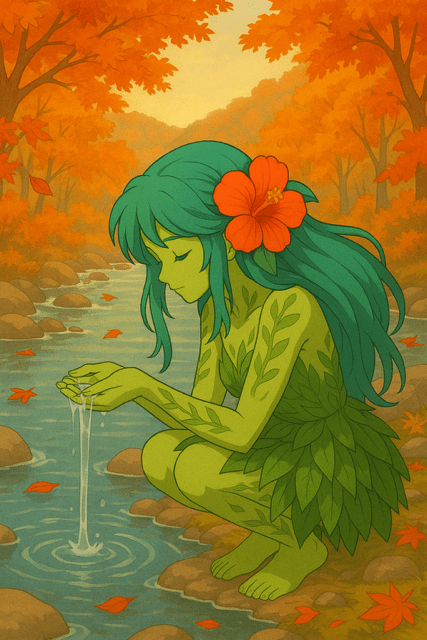
Disconnection from nature becomes normalized
A depleted inner ecosystem naturally leads to depletion outside oneself.
Soul Sustainability™ teaches that healing the inner ecosystem is a prerequisite for consistent ecological action.
The SEE™ Principle: The Starting Point for Inner Ecology
The first pillar of the SOUL Sustainability™ Framework is SEE - the practice of awareness. Awareness is not passive; it is a form of ecological intelligence.
Neuroscience research shows that the act of observing one’s habits activates the prefrontal cortex - the part of the brain responsible for regulation, intentionality, and conscious decision-making. Tang et al. (2015) confirmed through MRI scans that mindfulness-based awareness training strengthens neural networks involved in emotional regulation and cognitive control.
When people SEE their patterns, they can shift them.
Examples of internal awareness as sustainable practice:
-
Noticing how stress makes you crave convenience purchases
-
Recognizing when exhaustion leads to digital overconsumption
-
Identifying emotional triggers behind impulse buying
-
Becoming aware of energy leaks (emotional and physical)
-
Observing how social comparison drives unsustainable habits
Awareness is ecological power.
Emotional Regulation as a Sustainability Tool
When emotions are disregulated, consumption becomes a coping mechanism.
Studies show that regulated emotional states correlate with reduced impulsive consumption, more patience, and better long-term decision-making (Panno et al., 2018). Inner calm leads to outer alignment.
How emotional regulation supports sustainability:
-
Lower cortisol → less stress shopping
-
Improved clarity → more thoughtful choices
-
Greater resilience → staying consistent with habits
-
Slower pace → reduced dependence on convenience culture
-
Increased empathy → deeper ecological connection
The planet benefits when the nervous system softens.
Nature as an Inner Healer
Nature is not only a place - it is a physiological regulator. A 2019 study in Scientific Reports found that spending at least 120 minutes per week in nature improves well-being and significantly increases pro-environmental attitudes (White et al., 2019).
Nature literally rewires inner ecology:
-
Lowers cortisol
-
Enhances emotional stability
-
Increases mindfulness
-
Strengthens ecological empathy
-
Reduces compulsive consumption
-
Restores energetic coherence
When humans reconnect with nature, sustainability stops being an obligation and becomes a natural way of living.
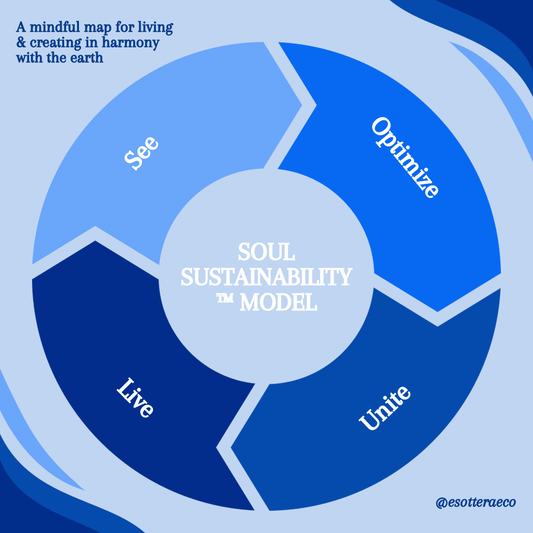
Soul Sustainability™: A Holistic Ecological Framework
Esottera’s Soul Sustainability™ integrates both inner and outer ecology through:
S - SEE™
Awareness of habits, energy, triggers, and consumption patterns.
O - OPTIMIZE™
Realigning systems-internal and lifestyle-toward low-impact living.
U - UNITE™
Reconnecting to Earth’s rhythms, intuition, nature, and emotional ecology.
L - LIVE™
Expressing sustainability as identity, lifestyle, and self-expression.
This framework merges science, spirituality, emotional ecology, and regenerative living.
Why Inner Ecology Is the Missing Link in Climate Behavior Change
Despite rising awareness of climate change, sustainability habits often fail to stick. Why?
Because most sustainability conversations focus on outer mechanics rather than inner readiness.
People cannot pour from an empty cup, nor can they sustain ecological habits from a dysregulated nervous system. You cannot heal the planet while ignoring your internal ecosystem.
When the inner ecology is balanced, sustainable living becomes effortless - not forced.
Conclusion: Heal Within, Heal the Earth
Sustainability must evolve into more than recycling and low-waste swaps. It must include healing the emotional, mental, energetic, and spiritual ecosystems within each person.
Inner ecology creates the foundation for long-term, meaningful ecological action.
Healing yourself is not separate from healing the Earth - it is a pathway toward it.
References (APA)
Panno, A., Lauriola, M., & Figner, B. (2018). Emotion regulation and risk-taking: The predictive role of regulatory skills in decision-making. Journal of Behavioral Decision Making, 31(5), 632-645.
Tang, Y.-Y., Hölzel, B. K., & Posner, M. I. (2015). The neuroscience of mindfulness meditation. Nature Reviews Neuroscience, 16(4), 213-225.
White, M. P., et al. (2019). Spending at least 120 minutes a week in nature is associated with good health and wellbeing. Scientific Reports, 9, 7730.