






































Slow Living as Climate Action: The Science of Doing Less
In a world that celebrates speed, productivity, and instant gratification, slowing down is often framed as laziness or privilege. But what if slow living isn’t a luxury at all - what if it is a form of climate action? What if “doing less” is not a retreat from responsibility, but a return to ecological harmony?
Slow living is more than a wellness trend. It is an environmental strategy. Modern sustainability discussions often emphasize technological solutions, political reforms, and large-scale policy shifts. These matter, of course - but we cannot overlook the impact of human behavior patterns, daily pace, and the nervous system on ecological outcomes.
At its core, slow living interrupts the frantic consumption loop. It heals the emotional, energetic, and cognitive systems that fuel overconsumption. And science is beginning to confirm what ancient cultures have always known: when humans slow down, the Earth breathes easier.
The High Cost of Fast Living
Most people underestimate the ecological cost of constant busyness. A fast-paced lifestyle burns through resources in subtle ways:
-
Increased reliance on convenience foods and packaging
-
Higher use of cars or quick transport
-
Frequent online purchases and shipments
-
Overspending caused by stress
-
Higher digital activity and screen time
-
More energy used to multitask and stay stimulated
A 2020 report by the United Nations Environment Programme (UNEP) revealed that lifestyles rooted in “high pace and high convenience” are directly linked to excessive carbon emissions, waste production, and energy consumption (UNEP, 2020). In other words: busy lives lead to busy landfills and overworked ecosystems.
Humans have adopted a pace the Earth cannot sustain.
Slow Living Reduces Personal Emissions - Scientifically
Slow living may appear gentle, poetic, or spiritual, but its benefits have scientific backing. When individuals intentionally reduce speed in their routines, several measurable ecological outcomes follow:
1. Less Convenience Consumption
When life feels rushed, nearly everything becomes disposable:
disposable meals, disposable packaging, disposable moments.
Slowing down creates space for:
-
cooking instead of ordering
-
mindful purchasing instead of impulse buying
-
walking or biking instead of quick drives
-
repairing instead of replacing
Each of these choices reduces emissions and waste.
2. Lower Digital Carbon Footprint
Slower living naturally reduces screen time, which lowers energy consumption - from servers, data centers, and personal devices.
Studies show that high-stress lifestyles correlate with increased compulsive digital use (APA, 2021). Slowing down softens this dependency.
3. Efficient Energy Use at Home
A slower nervous system leads to calmer routines. People:
-
eat earlier, reducing nighttime electricity use
-
cook intentionally, reducing food waste
-
avoid multitasking, lowering device usage
These micro-shifts add up.
4. Less Shopping, More Presence
Stress and speed make people buy more.
Slowness and presence make people appreciate what they have.
A calmer mind is less susceptible to:
-
targeted ads
-
stress-driven spending
-
trend chasing
-
impulse acquisitions
The result is a smaller footprint.
The Neuroscience Behind Slow Living
Slow living is a nervous system practice as much as it is a lifestyle. Research from the National Institutes of Health shows that high-paced living overloads the sympathetic nervous system - the “fight or flight” response (NIH, 2021).
This dysregulation leads to:
-
overeating
-
impulse purchases
-
reliance on quick convenience goods
-
poor sleep (which increases consumption)
-
emotional exhaustion
When individuals slow down, the parasympathetic system activates, promoting restoration and clarity. This calm state correlates with better decision-making and more consistent sustainable behavior.
Slow living makes sustainability easier.
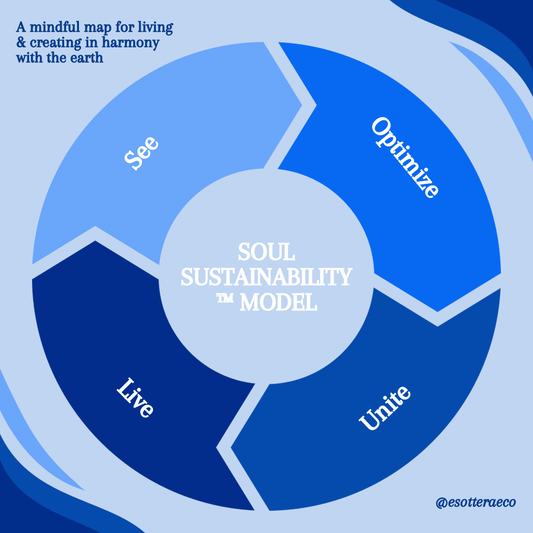
The SOUL Sustainability™ Perspective
In Esottera’s framework, slow living aligns with two pillars:
O - OPTIMIZE™
Slow living optimizes internal and external systems by removing stress triggers and simplifying routines. When life is slow, energy flows with intention rather than depletion.
U - UNITE™
Slow living reconnects people with Earth’s rhythms - the sun, the seasons, natural cycles, body signals, and intuition. This creates ecological empathy, a direct predictor of sustainable behavior.
Fast living disconnects.
Slow living reunites.
The Rhythms of Nature vs. the Rhythms of Capitalism
Nature moves slowly:
-
Trees grow patiently
-
Soil regenerates gradually
-
Ecosystems evolve over decades
-
Animals follow cyclical patterns
-
Seasons flow without urgency
Humans, however, have adopted an artificial tempo.
Consumers now move faster than forests can regrow, oceans can stabilize, or minerals can replenish. When humans ignore natural rhythms, their consumption becomes extractive rather than reciprocal.
Slow living is not a rebellion - it’s a return.
What Slow Living Looks Like in Daily Life
Slow living isn’t about living off-grid or abandoning responsibilities. It can weave into modern life in simple, powerful ways:
-
Leaving 10 extra minutes for transitions
-
Cooking meals made of whole ingredients
-
Spending 20 minutes outside daily
-
Having device-free evenings
-
Walking instead of scrolling
-
Creating a nightly wind-down routine
-
Doing one task at a time
-
Shopping with intention
-
Making space for silence
These habits require no drastic change - only presence.
Small acts accumulate into ecological impact.
How Slow Living Reduces Anxiety and Overconsumption
There is a deep psychological link between stress and consumption. When people feel rushed or overwhelmed, the brain seeks dopamine spikes through:
-
new purchases
-
snacking
-
digital stimulation
-
entertainment
-
novelty
Slowing down reduces the triggers that lead to these behaviors.
A slower nervous system is a lighter ecological footprint.
Slow Living as Emotional Ecology
Inner ecology refers to the emotions, energy, and mental balance within a person. Slow living nourishes emotional ecology through:
-
reduced sensory overload
-
more grounded time in nature
-
stable hormone patterns
-
improved sleep
-
deeper relationships
-
fewer distractions
These create the conditions for sustainable habits to take root.
Slow living heals the ecosystem of the self.
The Planet Needs Humanity to Slow Down
The climate crisis is not only an emissions crisis - it is a pacing crisis.
The planet cannot keep up with the speed of human extraction, production, and consumption. By choosing slow living, individuals participate in ecological repair.
Slowness is not stillness - it is conscious motion.
And conscious motion is sustainability.
Slow living is climate action.
References (APA)
American Psychological Association. (2021). Stress in America: The role of technology and pace.
National Institutes of Health. (2021). Stress and behavioral patterns in modern lifestyles.
United Nations Environment Programme. (2020). Sustainability and consumption report.