






























Which Natural Fibers Are Truly Compostable? A Breakdown for Eco-Conscious Creators
Which Natural Fibers Are Truly Compostable? A Breakdown for Eco-Conscious Creators
In a world where greenwashing is rampant and sustainability labels can be confusing, compostability is one of the clearest ways to determine how earth-friendly a fabric truly is. For our nature-loving community here at Esottera, knowing which fibers return to the earth (without leaving a toxic trace) helps us make intentional choices in both design and daily life.
But not all "natural" fabrics are created equal when it comes to compostability. Let’s break down which ones truly disappear back into the soil - and which need a closer look.
1. Organic Cotton - Fully Compostable
-
Yes, even at home compost level.
-
As long as it's untreated (no synthetic dyes or coatings), organic cotton will break down in 1-5 months depending on thickness and compost conditions.
-
Caution: Conventional cotton often contains pesticide residues and is bleached or dyed with harmful chemicals - those versions should not be composted.
2. Hemp - Fully Compostable
-
Hemp fibers break down similarly to cotton when left untreated.
-
Bonus: Hemp is naturally antimicrobial, so it rarely needs harsh finishing chemicals.
-
Used in some of Esottera’s future product lines for its durability and eco-benefits.
3. Linen (Flax) - Fully Compostable
-
Like hemp, linen is made from plant stalks and returns to soil easily.
-
Takes about 2-6 months to decompose if free of dyes and synthetic finishes.
4. Bamboo - It Depends
-
Raw bamboo (used in raffia-style products): compostable.
-
Bamboo viscose/rayon: Not compostable at home due to heavy chemical processing - even if marketed as “eco.”
-
At Esottera, we steer clear of this fiber unless it’s produced through closed-loop processes.
5. Wool - Compostable (With Caution)
-
Wool is a protein-based fiber and can be composted, but it takes longer (up to 12 months).
-
Avoid composting superwash wool (treated with plastic-like resins) or wool blends with acrylic or nylon.
6. Silk - Compostable
-
Real silk (from silkworms) is a natural protein fiber and will decompose over several months.
-
Be cautious with dyed silk or “vegan silks” made with synthetic processes.
7. Alpaca, Cashmere, and Other Animal Fibers - Compostable
-
Like wool, these are compostable in their raw state.
-
Ensure there are no blends or coatings, especially in fashion applications.
Avoid These “Tricky Naturals”:
-
Blended fabrics (e.g., cotton-poly mixes): Only the natural portion will break down - synthetics remain as microplastics.
-
Dyed or coated textiles: Synthetic dyes or waterproofing finishes interfere with compostability.
-
Rayon, Modal, Viscose: Technically plant-based but processed with harsh chemicals - not safe for home composting.
How to Compost Fabric at Home:
-
Cut fabric into small pieces to speed up decomposition.
-
Soak in water before adding to the pile.
-
Combine with green (wet) compost items to balance carbon.
-
Turn your pile regularly for airflow and microbial activity.
-
Keep an eye out for synthetic threads, tags, or stitching.
Final Thoughts & Tips
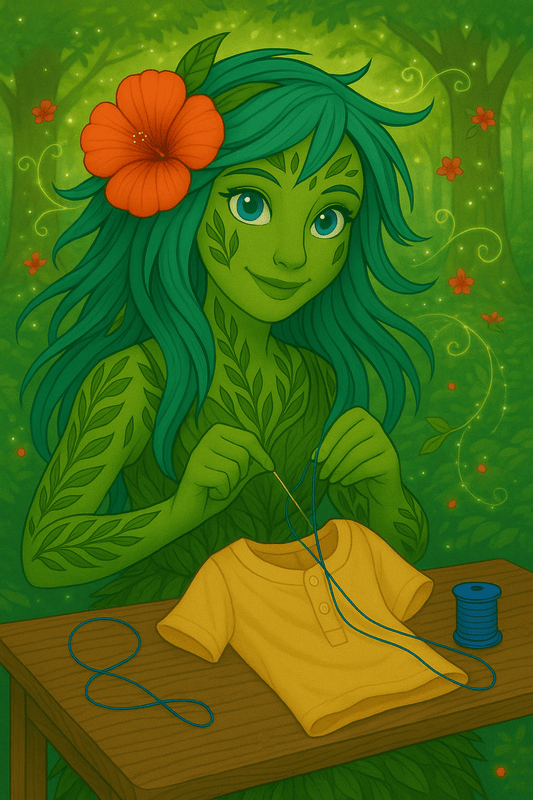
A good rule of thumb is this: if items contain dyes, plastic notions, or similar materials, consider repurposing them into something else you can use. (It’s a wonderful idea to keep a simple sewing kit at home.) This way, we continue to care for the planet.
If the item is free of dyes and made from 100% natural materials with no notions - unless the notions are all-natural, like untreated wooden buttons - you can follow the composting tips mentioned above.
Composting is a fun and rewarding activity that allows you to genuinely connect with nature. Watching the process from start to finish can create a newfound respect for the Earth and its incredible capacity for renewal. Always do your research before beginning activities like composting to ensure your habits align with natural processes, rather than unintentionally harming them.